

Maximize In-Person Networking with MCEI Seattle and Brandon Lee
We welcome Brandon Lee of Sequence Strategies, who also serves as president of MCEI (Marketing Communications Executives International) Seattle, to talk about why in-person networking matters more than ever and how our long-standing group has adapted since COVID. We discuss how the pandemic reduced attendance and how we’re balancing prestige with innovation, including a LinkedIn group, and exploring paid media and other channels to stay connected between meetings. We also cover Brandon’s earned-media and strategic communications work—helping organizations clarify their story, align with paid media, and build lasting communications infrastructure.
00:00 Welcome Brandon Lee
01:48 What Is MCEI Seattle
04:16 Why In Person Networking Matters
04:45 Rebuilding After Covid
08:26 What Meetings Look Like
10:38 Modern Marketing Changes
16:46 Member Drive And How To Join
20:27 Sequence Strategies Explained
22:25 PR And Paid Media Alignment
27:55 Wrap Up And Invitation
More from Brandon Lee:
Links and Resources:
Thanks for tuning in! Subscribe to The Paid Media Playbook on iTunes and Spotify, and leave us a review!
Transcript:
This transcript is computer generated, please excuse any typos
Laura: [00:00:00] Welcome, Brandon Lee. Brandon is with Sequence Strategies, and also he's the president of MCEI, that's Marketing Commun-Communications Executives International, and it's a, a networking group here in Seattle.
And Brandon and I are gonna talk a little bit about that as well as Brandon's consultancy. for 15 years, Brandon has partnered with leaders in nonprofit business and government, helping clients identify and tell [00:01:00] powerful stories. So let's start off, Brandon. Welcome.
Brandon: Thanks, Laura. Good to be with you
Laura: Yep. So Brandon and I are on the board MCI, and we wanna, like, take some time to, like, share what we get out of it and why these things are important now more than ever to have these kind of in-person moments with your colleagues and that sort of thing. Brandon, I'm gonna leave it to you to maybe give us a brief overview of MCI so I'm not talking the whole time.
Brandon: Yeah, absolutely. First of all, thanks for having me on the podcast. This is exciting. I've been looking forward to this for a while. Seeing the guests you have has been cool to see, and so I'm glad to count myself as one of them now. So MCEI is Marketing Communications Executives International here in Seattle.
The international is somewhat of a mystery. We've been around [00:02:00] for about 40, 45 years we believe. There are some other chapters around there, out there. But we've been focused on what's happening in the Seattle community, which is really bringing leaders executives in the marketing and communications space together to learn, connect, and engage with one another.
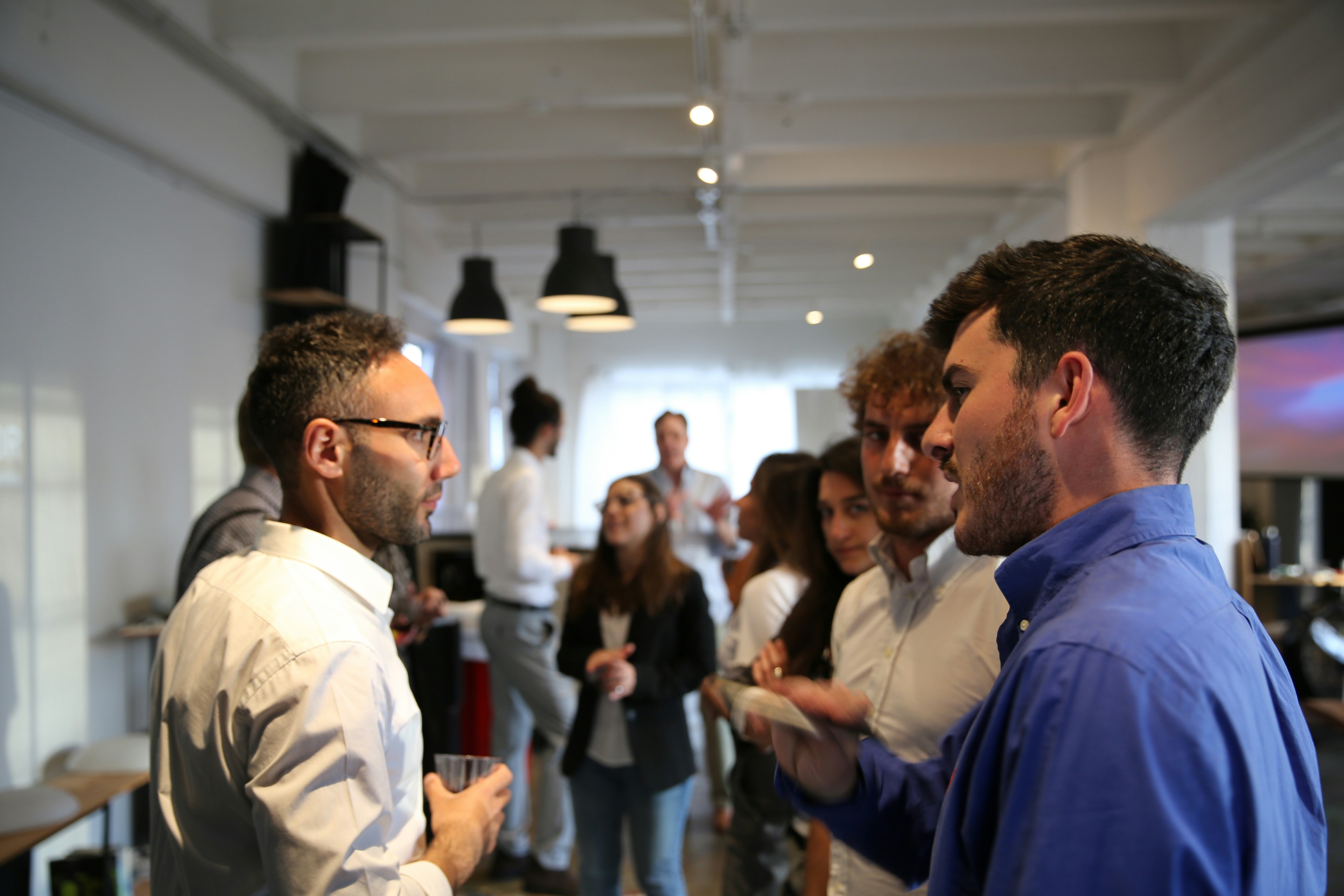
So it's a really simple concept. We're a club that meets once a month to share a meal, and we invite a speaker, a guest speaker from the marketing communications field, who gives sort of a case study, a presentation on a challenge they've faced and overcome. We've had everybody from on-air TV talent to marketing directors community organizations, folks in the agency world who are able to kinda Peel back some of the kind of mystery and some of [00:03:00] that expertise in what they bring to the communications world.
As you mentioned, Laura, I'm currently the president of the board. I'm going on my second year, and I had the opportunity to join MCEI about four years ago, and it was really from kind of a, a selfish reason. I was starting a consultancy, and I just needed to know how to do that. Like, I needed to know how to be a leader in marketing and communications world.
So I was invited by a colleague of mine who I had worked on my first project as an independent consultant, and she said, "Hey, you should you should come to MCEI. You're gonna meet some great people and learn a lot." And here I am about four years later that's definitely been true. So it's really been a place where I can go connect with a small, intimate group of like-minded colleagues, [00:04:00] executives who are out there doing this work, and it's helped me so much just become a better professional, to get engaged, and to have a forum which is more rare in today's world of actual face-to-face networking and communication.
You know, I started my consultancy during COVID, and I thought, "I'm gonna get on LinkedIn and do the remote work thing and just, this is all gonna work." You really need to build trust and relationships with people, and that starts with getting in the same room
Laura: Yes, 100%.
Lisa: COVID. How have you seen networking change sort of in that pre and post-pandemic society?
Brandon: Yeah. It's changed so much to where it's not even recognizable from the before times. And I know with MCEI, I had not been involved pre-COVID, but from what I've learned, the organization really took a [00:05:00] big drop, just like most organizations did in terms of attendance and membership during COVID. Folks just weren't able to meet together let alone share a meal together with all the restrictions and everything happening in the world.
So, I've been focused, and I know you have as well, Laura, on how do we rethink community in this day and age, networking, value, relationships, and trust building. So it's been a challenge, but it's been really fun too, to be able to, to kinda innovate and think about new ways, new audiences new formats with a traditional networking group and how to, how to make it forward-thinking.
And so with COVID, everything just changed. I mean, that's cliche at this point, but it, you know,
Laura: I'd be okay if I never saw a breakout room again,
Brandon: Yeah. Abs-- Well, that's--
Laura: no.
Brandon: goes without saying. Yes That's one of the top priorities that we want to [00:06:00] avoid, and I think we're doing a pretty good job with that
Laura: Oh, yeah. I think we-- I mean, the fact that we were able to sustain as many members as we did and, and still be alive after that when so many other networking groups died and and really struggled. And we still maintained pretty you know, break-even nonprofit status, right? And so, that's, that's pretty cool during a time that was...
And it just shows that because it's like Seattle's oldest marketing group and networking group, there is a tremendous amount of like longevity, continuity there. People are really invested. Some people have been there literally 40 years. You know, some people have been there for a year.
Brandon: absolutely. It's an important point, and one of the great things about this group is that it kinda blends this traditional really prestigious, long-lasting group with innovation and being on the cutting edge of an industry that is really changing. And so we've really [00:07:00] worked to balance that exclusivity and sort of that, that prestige with forward thinking with how can we make this group more relevant.
I would say at the top of the list, it's is this providing value to members? Are the conversations happening? Does it feel like something that's not just more work, but that you can go and have fun, you can share a meal, you can learn something, and really engage and contribute something to bigger than yourself.
And from personal experience, that's the value I've got from it, and that's what I hope to see for it moving forward, and that we're all sort of together working toward
Laura: Agree. I feel like I've made lifelong, like, connections. I've been there for, like, almost 10 years I feel like now, and I just have these, like, close... I mean, when you get together with anyone once a month, I mean, we see-- sometimes we see [00:08:00] each other more than we do our close, really close friends because you have this set time that you always see each other.
And so it's really cool. Over years, that once a month matters, and you end up making these business relationships, these friendships that are, you know, they're so symbiotic. And, I've gotten clients from MCI, but I've also gotten, you know, these just deep, long trusting, you know, partnerships with vendors.
And I've learned so much from other people, And, oh, I should just say for everybody, because I don't think I talked about yet what MCI truly looks like. But basically we get together around 5:30 at Ivar's and North Lake Union Salmon House from 5:30 to about 6:30, we have a cocktail hour and kind of just hang out, and then we sit down for you know, sit down meal.
There's big round tables and everybody sits together. then we have a program. We usually have a table time where we share. We have a spotlight for [00:09:00] a certain member to get to talk about what they do and yeah, and then we have this killer program and and they do serve wine with the meal too.
Brandon: Yes. And at
made a great point, which I think is the success of the organization, is that it's on a consistent cadence. So we meet the second Wednesday of every month. Folks know there's gonna be this time, and for years, for decades, they've been able to have that consistent cadence of meetings. And so folks get excited about it.
They know we're gonna meet in person and have a meal and see a great speaker. Again, it's not anything super complicated, but it's very human and it's very authentic. And those are two elements in the business world that just aren't easy to access today. And so for me personally, I like that it's this intimate group of folks I've been [00:10:00] able to get to know over the years.
There's not this pressure to sort of sell your product, but just to be human. And sure, you know, eventually people we're all professionals. We may do business, we may make those connections and build that trust, but just having human relationships and being able to talk about different ideas, challenges that you face and that you hear from somebody on the other side of the industry is facing there's that real moment of connection and trust building that is valuable just from a personal perspective
Laura: I would say one more thing with talking about networking then and now. I would say, you know, and just to give everyone a little idea, in the past, MCI was a, and it still is, an invite-only group. That said, advertising and marketing looked a lot different even 20 years ago. There was, you know, before [00:11:00] digital and before, like, Amazon blew up and, you know, tech just took over Seattle, marketing was like public relations, print, TV, outdoor, radio, and, you know, grassroots sorts of things, right?
Like, we only had so many ways to talk to people, and the news was a lot different then, right? Like your, your, your social media didn't exist. So, those are big things that, you know, changed the landscape of a networking group because y- everything was a big club. It was kind of like a, a... Yeah, it was just a big club.
Let's just leave it at that. And that was like everybody kinda knew each other And now it's because we are so fragmented, you know, we may never do business together, like we would've never met in the real world. But here we get to, to do that and bounce ideas off people we would've never done because, you know, I'm in media buying, you're in public [00:12:00] relations, you do a lot of government affair stuff, we're not gonna cross paths until we need to cross paths somehow, somewhere.
And this really opened up an opportunity to be like, "Hey, if I ever need this, I know who to go to." And it gives, gives you more options and that sort of thing because we built trust
Brandon: Absolutely. And as an independent consultant who does that really niche, you know, public relations, strategic communications, I only see that side of the larger marketing communications world. So having this forum is so valuable to see folks who are, who are doing paid media, who are doing advertising, who are doing event planning, and see the side that they represent.
Because I might be a part of that work in some way, but I'm not driving it. So when I can hear the challenges they face and see the commonalities it really benefits me in terms of my own professional development. And I think the through line, you know, we do all [00:13:00] these different things. We have folks in all different fields from finance, government, healthcare nonprofit, philanthropy world coming together, but we're all sort of seasoned experts.
You know, we've been on that leadership track. It is an executive organization, and so that's what kinda binds all of the members together is that like, you know, it's not our first rodeo. We've seen a few things in this really changing industry, and we're sort of all navigating it and grappling with it together.
And to be able to hear how somebody overcame a challenge or is sort of driving into a new space is really beneficial for our own practice.
Laura: Absolutely. If I feel like if I have an issue and I'm, you know, I have no problem kind of being vulnerable and being like, "Hey, are you..." And I get feedback like, "I'm not alone." Okay. And this is, you know, and this is what you're [00:14:00] doing, you know? Okay. Yeah. Okay. I'll think about doing that too, you know?
It's like I need... Who doesn't need that nowadays? And I I can't even stress enough the in-person thing, though. Just the energy that you can exchange with people when you're, you know, seeing them face to face and the emotion, you know, I, I don't know. I talk with my hands. It's hard.
Brandon: Yeah It's a real value that is, I think over time experienced in different ways. And, you know, ag- again, I, I joined for a selfish reason. I was starting out independent. I was at an agency for a decade, head down, doing work, did not build my network. Realized that I should have been building it regardless of whether I went out on my own or not.
In today's world, you have to continue to be proactive. First, understand, identify your own story, and then feel confident in being able to tell that story and find new folks to be able [00:15:00] to continue the communication. So MCEI Seattle has really been the forum where I'm able to put into practice a lot of these things that I talk about and sort of counsel clients with and do in my own consultancy.
I'm able to sort of get that messaging, find ways to disseminate it, and execute that and amplify it to my own networks, and then hopefully help other peers and colleagues understand, identify their own stories, and be able to effectively tell them to do better work for their own practice
Laura: Heck yeah. one thing that I was going to say that is kind of just a side note for me is having come out of COVID and not having a lot-- and I'm working from home. We have a office where we come in twice a week, but it's just, like, me and the staff, right? So I don't get out that much as far as, like, in my professional except for, like, maybe some events and that sort of thing.
But this is a [00:16:00] consistent time where I look forward to, I hate to say it, like putting on a pair of heels or you don't have to dress up to come to MCI, but if, you know, you have things that you're like, "Damn," that's just me. I mean, I just wanted to share that with everyone. I freaking look forward to like, "Ooh, what am I gonna wear?"
Brandon: that it's a nice forum to be able to, to put on the professional
Laura: Yes
Brandon: the professional suit, the feeling like, you know, it's good time to be with other folks who are executives, who are honing their own crafts and getting better with communicating. It's just absolutely phenomenal space for that work
Laura: And important, I feel like, God, it's so important to not lose that face-to-face. It's just so
Brandon: Absolutely
Laura: We were-- You know, one thing that we're doing right now that I wanted to talk about Brandon, and we haven't, you know, we're still kind of fleshing it out, but we are doing a, for lack of a better word, a member drive in February and March of this year [00:17:00] to with a significant discount to, in order to get people to try it out.
And you know, so that's, that's, we're gonna have some links a-after in the, in the, where you could sign up or find out more information or just call Brandon and I, you know, or email us and we can chat about it and give you more information about it. But it's, you know, this wasn't necessarily meant to be an advertisement, but maybe a little?
It's a good thing, and at the end of the day, it, it's changed my career, and that's a big deal
Brandon: Yes, and it's so important. I'm so glad you brought it up. We are exploring new opportunities for membership and ways folks can get involved. As you did note, it is a long-standing organization. It's been around Seattle for decades, and it's invite only. That's still the case. However, we love to have new guests who can walk in, who can register as a guest [00:18:00] and just experience what we're all about.
So folks wanna go to mcei-seattle.org. You can learn all about the organization, and you can actually register for an upcoming meeting. So we meet once a month. It's the second Wednesday of each month at five thirty PM at the Ivar's Salmon House on Lake Union. We're joined by a great speaker who shares their perspective, and we have a meal, and we have about an hour for social networking, which is fantastic.
We are doing a few things that we haven't done before. We're exploring paid media opportunities. You know, just knowing how much business and communication is done on platforms like LinkedIn. We're thinking about using that space to amplify posts and invites to events happening, which is [00:19:00] great.
We do have a, a group in LinkedIn. If you search MCEI Seattle, you can find that, and that's really a space for providing recaps of meetings previews for upcoming meetings and just folks to talk about what they've learned or experienced. And it's something we're still continuing to think about.
We're also exploring, you know, what are the other platforms and channels that members can connect with each other between meetings. While we do meet each month, and that's the real core value, that face-to-face time, that networking relationship, trust-building time. In today's world, there needs to be ways to bridge those times 'cause we're only meeting once a month.
What are the ways we can do that in the digital space to stay connected? Opportunities like this to continue to have those conversations between meetings is so important. So as we look to explore and expand membership, [00:20:00] we really wanna do it in the right size, the right way, and make sure that we're targeting those audiences who are gonna get the most benefit and biggest impact about what MCEI Seattle has to offer.
Laura: God, you just said it so well. I don't really have
Brandon: I've been around for a while now and I'm,
Laura: it's like you're in public relations and content strategy and yes.
Brandon: Yeah, and that's a great segue, Laura. I'd love to talk a little bit about the work that I do that brought me to MCEI Seattle. So I am in public relations, strategic communications. It's really the other side of the coin of what you are all doing in the paid media world. So I'm working to get earned media, which is really persuading validators out there, the newspapers, the bloggers, the platforms to [00:21:00] cover an issue that my client might be hoping to get out in that space.
So opinion editorials events, what is the effective messaging? What's newsworthy that folks are talking about to where we can get these validators to cover that issue at no cost? Now, as a consultant, of course, I'm counseling folks and providing that service, but ultimately the hope is to get coverage and the conversation going without paying.
What I will do is work with a paid media team, with advertisers on a more holistic communications campaign. So whether that is a political campaign, whether it is an issues-based initiative, but you know, there's multiple sides of that. Yes, you wanna get the spot on radio and television, but you wanna amplify it through the opinion piece, through the [00:22:00] commentary, and really generating that conversation.
So when I work with a client, I may be on that PR strategic comms side, but I need to coordinate and align with the paid media folks, advertising, marketing, so the message is understandable from all those angles, and so we have a campaign that's really effective in reaching all of our audiences
Laura: Absolutely. I totally agree. It's like they go so well hand in hand Because you have to be on the same page about where you're at too. Like, how can I support you if you're gonna try to, you know, get this and this and this coverage? Can I buy some things to, to support that so there's some frequency in there?
Or let's align on audiences and make sure that, you know, where you're reaching out is, you know, is that worth it for you to do all this work if there's not that many... You know what I mean? Like, we're looking at eyeballs all the time, right? And it's like, oh, it's wonderful that you got this, but [00:23:00] nobody's gonna see it unless either we push it, you know what I mean?
Or, so it's, it's very, you know, they work so well together to have all the data and research and not that you guys don't, 'cause of course you do, but it's different on frequency and how we have to do paid where we can control how often we get covered, so to speak.
Brandon: Absolutely. And it's just the case that everybody at every level, individual, executive, organization, needs to know their story and their messaging and be able to communicate that effectively. So whether it's business, nonprofit, government, every organization needs to be able to identify their own stories and to be able to tell them in a powerful, compelling way.
So I feel like I'm so fortunate to be able to counsel these organizations and individuals in really helping them recognize what's already there, but just be able to hone that and craft it in a way that's [00:24:00] effective in reaching who they want to reach. Maybe they don't know who would be interested in hearing from them.
It's really about developing a framework and an infrastructure to be able to do that on their own long term. As much as I love the clients I work with and the work I do, I want to sort of work myself out of a job to where they have now built the infrastructure, they have the confidence, they know their story, they can tell it, and they can do it effectively, and I've helped them get to that point.
But then they sort of hire their own director of communications and their, their own internal staff to really be able to do that effectively moving forward. I would say that in my work, I've had a unique role in that I primarily work with issues and causes rather than products. Although they're similar in that every product or issue or campaign has a story and a message, [00:25:00] I would say my background has primarily been in issues-based public affairs, public policy type work.
So everything from political work to philanthropic work to nonprofit. I've been privileged to work in spaces in healthcare, education homelessness response systems, and I'm doing all that with my current consultancy, which is Sequence Strategies. I'm looking to grow. I've had such an awesome experience these last four years partnering with full service agencies, with paid media folks like yourself, Laura, and others to really find value in that earned media and public relations lens that's just so important for today's really condensed, fragmented media landscape
Laura: Absolutely. And it's wonderful because you're going in and doing, [00:26:00] am, am I right? You're doing the media training and that sort of thing so that people can confidently have responses when they get on the news and you, you know, or whether they're being interviewed, how to, how to, you know, coach people on how to, And then once you have that infrastructure set up, they can stick, you know, a marketing director in there or whatever because they have a structure of how things are be, so it's not gonna change every time a new marketing director comes, right? 'Cause you, you have a structure about your brand and how you do your outreach, and it's, there's a strategy already.
Brandon: Yes. And with some clients, it's, it's more strategic, like how do we identify our strategy and build that infrastructure? For some it's execution. Maybe they do need some support with getting social media content out there or blogs. And then some need evaluation, right? Like, what is our brand? Is it effective?
What are some metrics that can tell us whether we're successfully communicating? So I like to provide everything [00:27:00] from strategy, execution to evaluation, but really scaling it based on the needs of the client.
Laura: Yeah. I mean, that's kind of where we need to be nowadays, right? Is like there's so many marketing directors in general have so many challenges, and they could be so siloed, and it's so nice to have like experts like you where they can, you know, they don't have to know everything. You don't have to know everything anymore.
there's too much to know and to do it well, you know? So yeah. It's takes a huge weight off, off your shoulders.
Brandon: Yeah. I like to say it's identifying the signal through the noise. There's so much going on, so much chatter, so much conversations and coverage. What's important and how can we focus on that to really make it impactful and effective for who we wanna reach?
Laura: Awesome. So Brandon, is there anything else you want to share specifically?
Brandon: No, I just appreciate [00:28:00] this excellent opportunity to share a little bit more about the value of networking and being connected to a professional community. So if folks wanna Google MCEI Seattle or go to mcei-seattle.org, check out our long list of prior speakers and who we have coming up. If you're interested in maybe joining as a guest, you can do that on the website, and you can reach out to folks in the contact information about potentially joining or just learning more about the organization.
We'd love to have you
Laura: Yep. what did I brand it that we haven't made it official yet? It's what was it? Seattle's Oh gosh, it was something about a dinner party, and I love it 'cause it feels like a dinner
Brandon: It is a dinner party. It's a dinner party with folks you want to be around and learn from, and you're gonna get so much value from having that space to be with others and to learn, connect, and engage
Laura: Thank you so much, Brandon, [00:29:00] for telling us about Sequence Strategies and for sharing MCI. I, I love the group. I know you do,
Brandon: Absolutely. Thanks, Laura. Thanks,
Lisa. Appreciate the time
Laura: Thank you
